What if the world's most transformative ideas weren't born in labs or boardrooms, but in the quiet corners of human curiosity? Dive into the unseen forces that turn everyday observations into breakthroughs that reshape our world.
The Spark of Curiosity
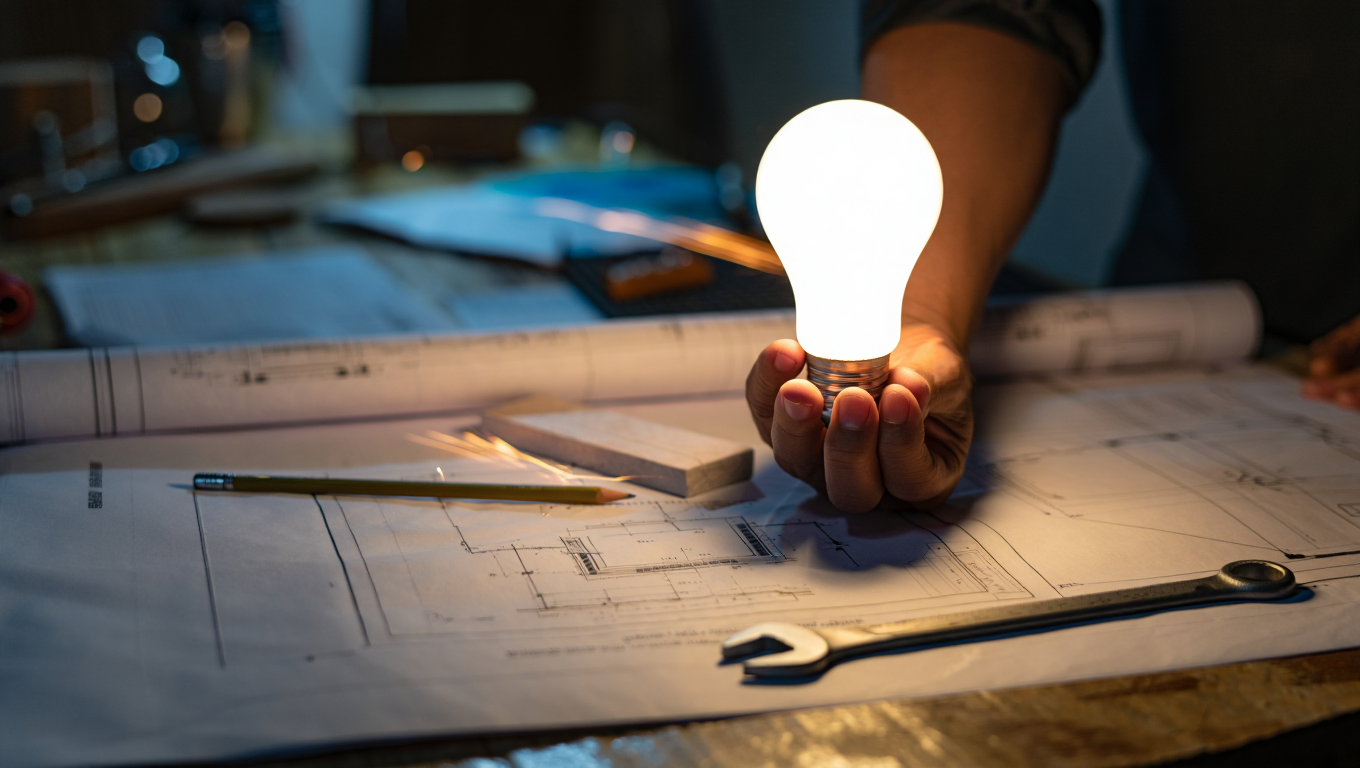
Picture a young inventor in a cluttered garage, staring at a flickering bulb. It's 1879, and Thomas Edison isn't just testing filaments—he's chasing a dream sparked by something as simple as watching a candle burn out. This isn't a tale of genius alone. Innovation often begins with a question that refuses to fade. Today, in 2026, we see echoes of this in the rise of citizen science projects, where ordinary people use smartphones to track climate patterns, uncovering data that challenges corporate reports.
But what ignites that initial curiosity? It's the human brain's knack for pattern-spotting. We notice anomalies in the world around us. A chef might wonder why bread rises differently in high altitudes, leading to new baking techniques. Or a mechanic sees a car's engine stutter, sparking ideas for hybrid fuel systems. These moments aren't random. They're fueled by our evolutionary drive to solve problems, turning mundane frustrations into portals for discovery.
The Dance of Trial and Error
Once sparked, innovation demands a rhythm of experimentation. Think of it as a conversation between creator and creation. A designer sketches a prototype, tests it, and watches it fail—only to refine it again. This iterative process, seen in the biotech labs of 2025 where CRISPR edits were fine-tuned for crops that thrive in arid soils, mirrors the way birds learn to fly: trial, correction, flight.
Not all paths lead straight to success. Some innovators adopt a character's view, like a detective piecing together clues. Others break it down step by step, as in the development of quantum sensors that detect underground water sources without drilling. These sensors, emerging in early 2026, stem from decades of patient adjustments, proving that innovation thrives on persistence rather than perfection.
The Ripple of Collaboration
Innovation rarely happens in isolation. It ripples outward, drawing in diverse minds. Consider the open-source movement, where software developers share code freely, much like musicians improvising in a jam session. In 2025, this spirit fueled advances in renewable energy, with communities pooling resources to build solar grids in remote areas.
Collaboration also means embracing failure as a teacher. A biologist might partner with an engineer to design prosthetics inspired by octopus tentacles, learning from each setback. By 2026, such partnerships are yielding wearable tech that restores mobility, showing how shared stories and expertise weave stronger solutions than solitary efforts ever could.
Beyond the Breakthrough
As innovations take shape, they reshape us in return. The electric car wasn't just about wheels—it transformed cities, reducing pollution and rethinking urban space. Looking ahead, 2026 innovations like lab-grown meat promise to feed billions without straining ecosystems, challenging us to imagine a world where human needs and planetary health align.
In the grand tapestry of human endeavor, innovation isn't a distant miracle. It's the quiet power within us all, a reminder that every question asked, every experiment tried, and every collaboration formed adds threads to the fabric of tomorrow. Through this lens, we glimpse a future not dictated by progress, but crafted by our collective wonder.