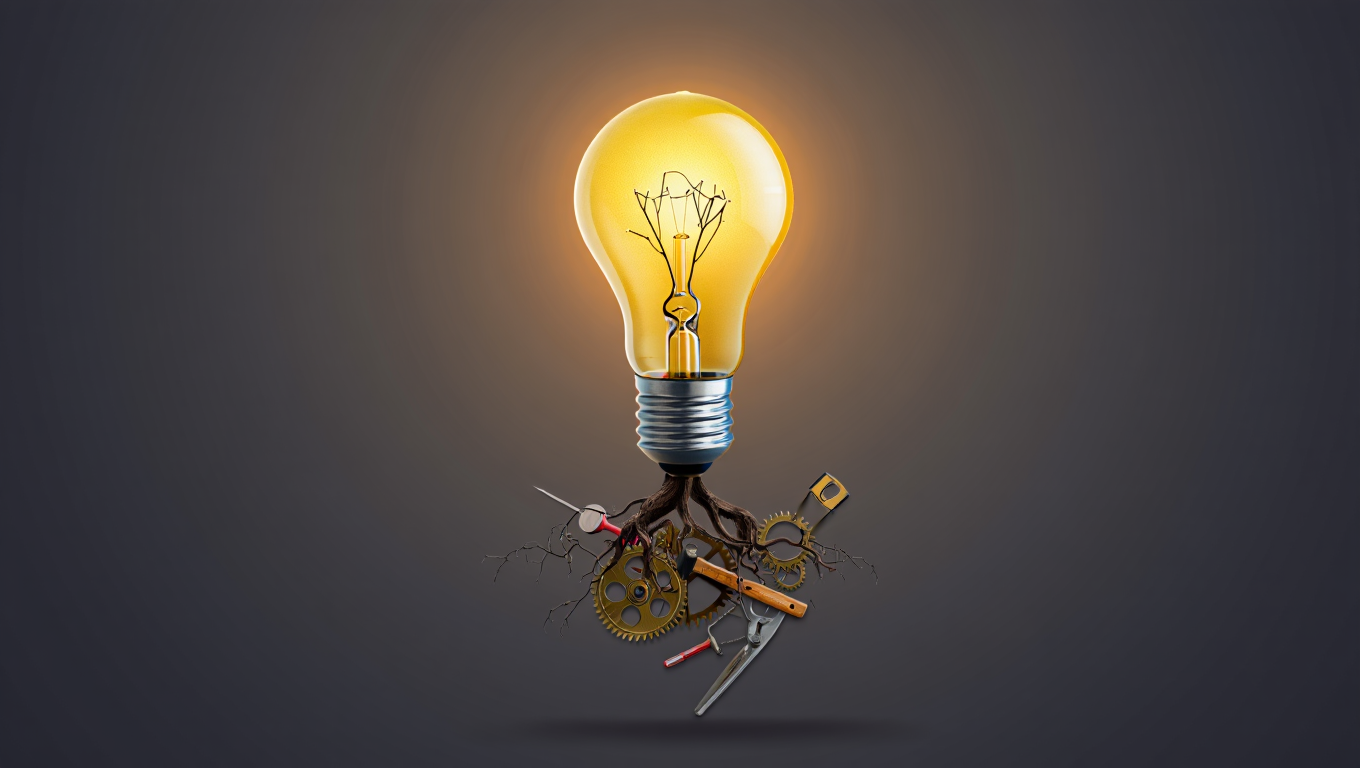
What if the wheel wasn't invented in a flash of genius, but through countless quiet tweaks? Discover how small shifts in perspective fuel breakthroughs that redefine our reality.
In the dim glow of a cave 30,000 years ago, a hand reached for a stone, chipping away not for survival alone, but to craft a tool sharper than nature's edge. This wasn't the birth of art or weapon, but the first whisper of innovation—a human trait that twists necessity into possibility.
The Seeds of Change
Think of innovation as a river carving canyons from flat earth. It begins with observation. In 2025, scientists at MIT watched how fireflies synchronize their lights, leading to algorithms for traffic flow that eased gridlock in cities like Mumbai. One researcher, staring at those pulsing insects, saw a pattern humans had ignored for millennia.
Step by step, the process unfolds. First, a problem nags at the mind—a leaky pipe in ancient Rome sparked aqueducts that carried water miles. Then, borrowing from the world: the airplane's wings mimicked bird flight, while solar panels drew from leaves turning sunlight into energy.
Crossroads of Ideas
Picture a blacksmith in 18th-century England, hammering iron into rails. His mundane work birthed railways, shrinking the globe. Fast-forward to 2026, where biotech labs fuse coral resilience with human cells, creating new medicines that adapt like living organisms. A doctor's late-night scribbles on antibiotic resistance evolved into treatments saving millions.
Yet, innovation thrives on collision. From the spice routes of old, where cultures mingled and swapped secrets, to today's global forums like the Paris Climate Accord expansions in 2025, ideas mash together. A farmer in Kenya, using mobile apps for weather prediction, now predicts droughts with accuracy once reserved for satellites.
- Challenge norms: Edison's light bulb emerged from 1,000 failures, each a lesson in persistence.
- Blend fields: Graphene, born from graphite pencils, now powers flexible electronics in 2026 wearables.
- Empower many: Open-source platforms let hobbyists design drones, transforming agriculture from hand-tooled to sky-guided.
Innovation isn't elite; it's democratic. A teenager in a garage, tinkering with recycled parts, might invent the next clean water filter, as seen in 2025's youth-led environmental hacks.
The Ripples Extend
As these ideas spread, they reshape society. SpaceX's reusable rockets, inspired by rockets' early failures, now make Mars expeditions feasible by 2030. Meanwhile, quantum computing, hitting milestones in 2025, promises to unravel mysteries from climate models to medical cures.
But consider the human cost: innovation demands risk. Explorers like the Polynesians sailed oceans on intuition, charting stars for navigation. Today, bioengineers push ethical boundaries, debating CRISPR edits that could eradicate diseases or alter futures.
Looking ahead, innovation points to a horizon where sustainability meets aspiration. By 2026, circular economies recycle waste into wonders, turning trash into treasure. In this dance of creation, every breakthrough echoes the cave artist's chisel, reminding us that humanity's greatest strength lies in our unquenchable curiosity to improve the world.