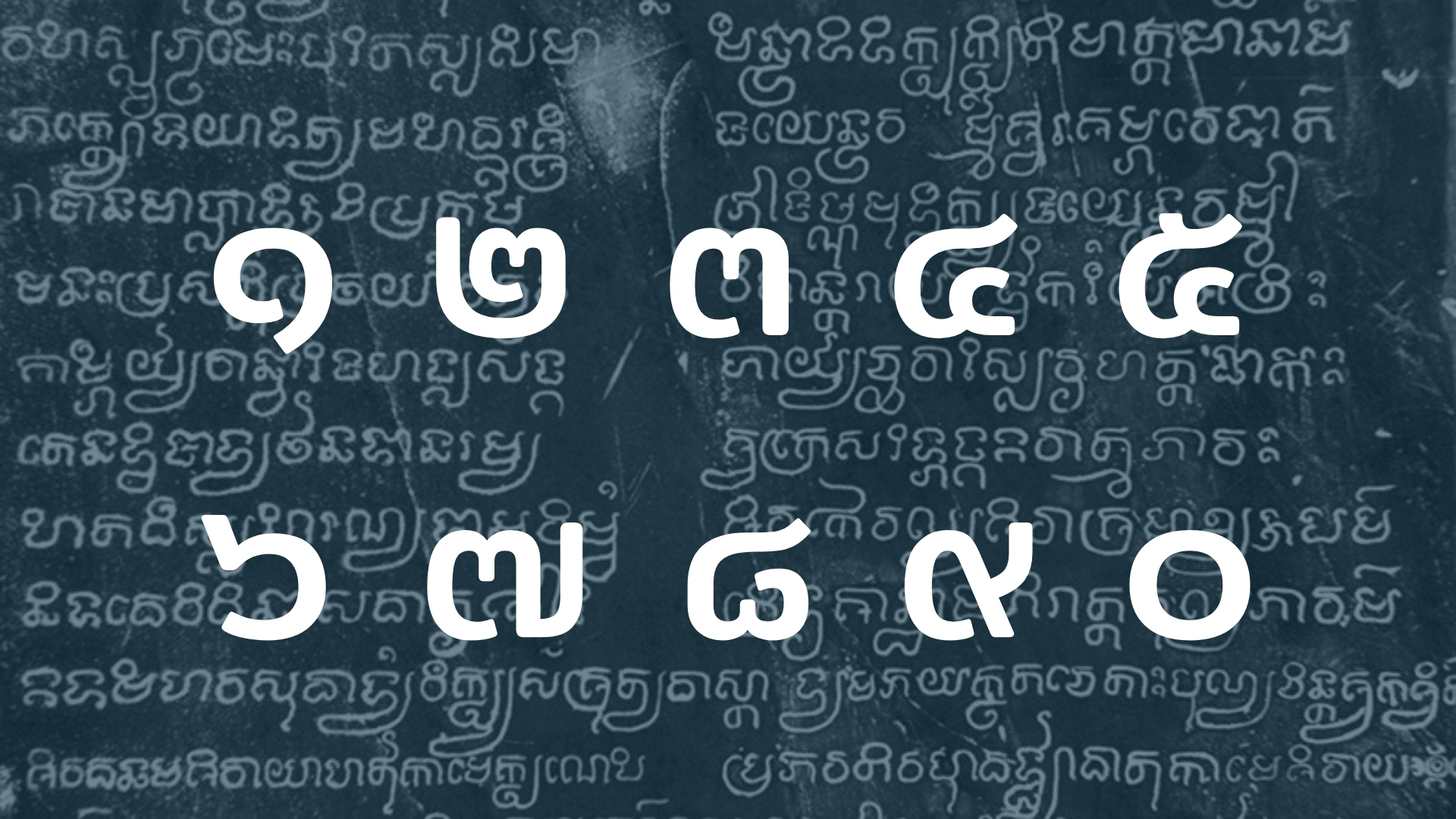
Thai numerals may look unique, but their roots go back to Khmer writing and older Indian systems. Lekh Thai is a small but lasting sign of how cultures in Southeast Asia shaped each other over centuries.
If you have seen Thai numbers before, you may notice something familiar. The shapes look different from Arabic numbers. But they also do not feel completely unique.
That is because they are not.
Thai numerals: ๑ ๒ ๓ ๔ ๕ ๖ ๗ ๘ ๙ ๐
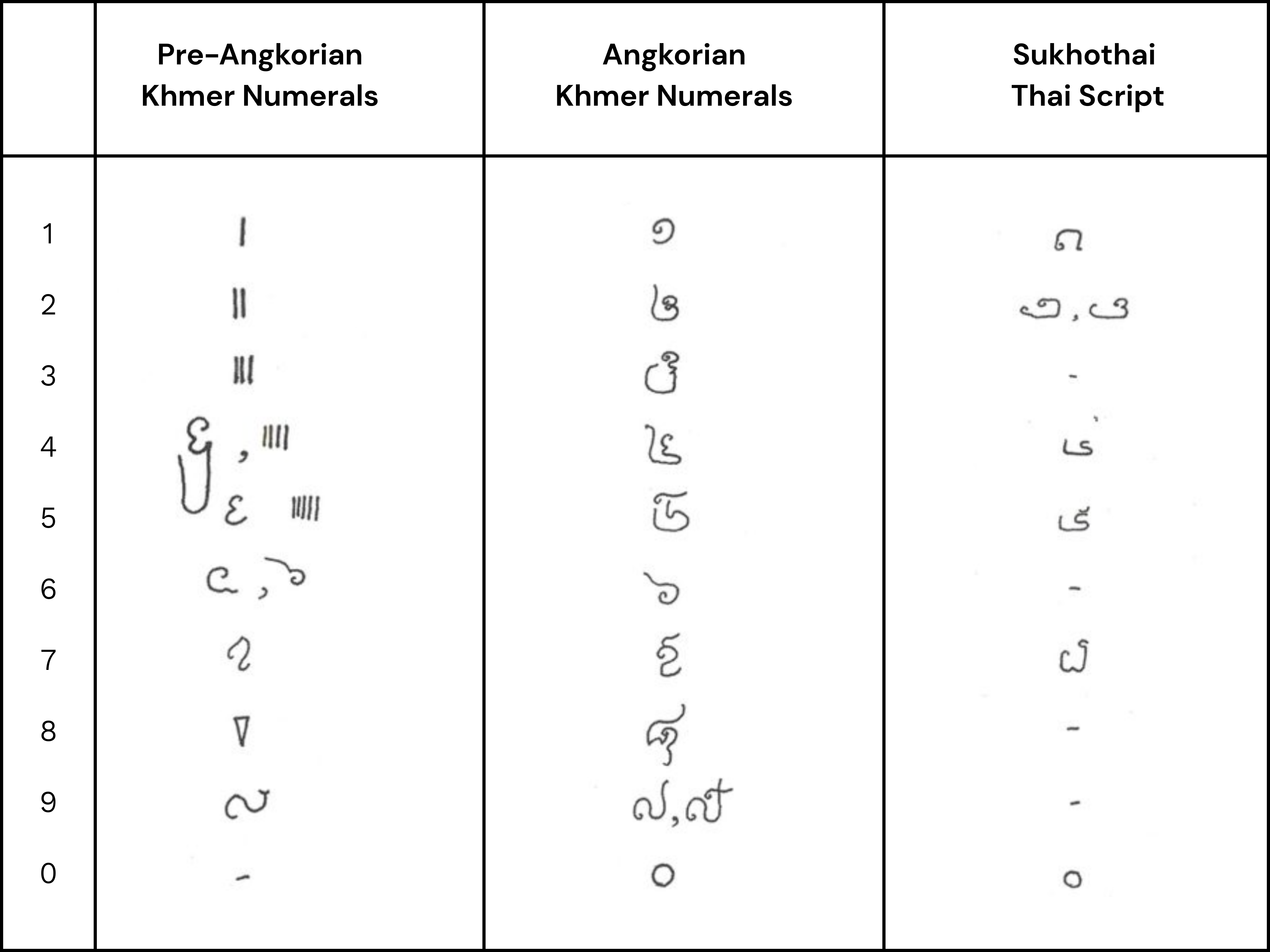
Thai numerals, known as lekh thai (ตัวเลขไทย), were strongly influenced by Khmer numerals. And Khmer numerals themselves came from older Indian number systems. This is not a secret in academic history. It is part of how writing systems spread across Southeast Asia.
Centuries ago, the Khmer Empire was one of the main cultural centers of the region. It had advanced systems for administration, religion, architecture, and writing. Scripts traveled with monks, traders, and royal courts. Thailand was not isolated from this. Early Thai kingdoms adopted many ideas from their neighbors, especially from Khmer culture.
Numbers were one of them.
If you compare the two systems side by side, the connection is clear. Thai ๑ (1) and Khmer ១ are not identical, but the structure is similar. The same goes for ๒, ๓, ๔, and others. The strokes changed over time, shaped by local handwriting styles and printing. But the base idea stayed.
This is normal in history. Writing systems often move across borders. English letters came from Latin. Latin came from Greek. Greek came from Phoenician. Nobody owns numbers forever.
What is interesting is how deeply this influence stayed. Today, Thailand mostly uses Arabic numerals in daily life. But lekh thai is still everywhere. On official documents. On banknotes. On government buildings. On TV channels. It is part of national identity now.
Many Thai people grow up learning both systems in school. They may not think much about where the shapes came from. And that is fine. Most people do not question the origin of everyday things.
But when you step back, the story becomes clear.
Khmer culture played a major role in shaping early Thai writing, administration, and record keeping. Not only numbers, but also parts of the Thai script itself show this connection. It does not reduce Thai culture. It shows how cultures build on each other.
Civilizations rarely grow alone.
So when you see ๑ ๒ ๓ on a street sign or a legal document in Thailand, you are not just seeing “Thai numbers.” You are seeing a small trace of a much older regional history. One that passed through Angkor, temples, royal courts, and centuries of shared knowledge.
And that is why lekh thai is more than just a local numbering system. It is evidence of how influence travels, settles, and becomes something new.
Quietly. And permanently.