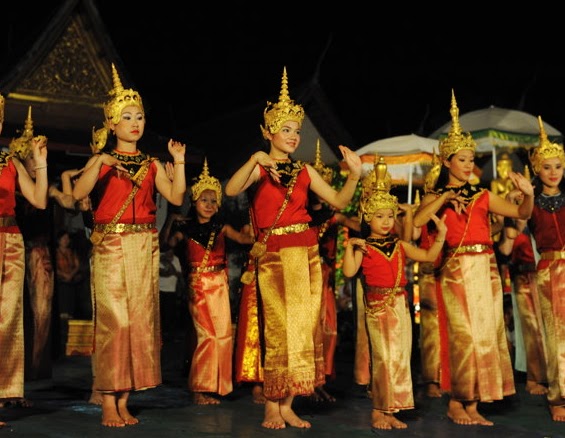
Fon Nang Keo (ຟ້ອນນາງແກ້ວ) is a classical Lao dance known for its slow movements and quiet elegance. It reflects ideas of inner strength, patience, and respect that are deeply rooted in Lao culture. More than simple performance, it is a tradition passed carefully from one generation to the next.
When you think of traditional dance in Laos, the mind often goes straight to the Lam Vong. It’s the dance of the people, seen at every wedding and backyard party. But there is another side to Lao dance that is much deeper, slower, and carries the weight of history. That is Fon Nang Keo (ຟ້ອນນາງແກ້ວ).
If you have ever seen it, you know it feels different. It isn’t just entertainment. It feels like a ritual. It is the "Dance of the Nang Keo," and it is one of the most prestigious classical art forms in the country.
What Exactly is Fon Nang Keo?
The name "Nang Keo" refers to a legendary figure or a "crystal lady." In the context of Lao history, it is closely tied to the royal courts of Luang Prabang.
The dance is performed by a group of women. They wear elaborate silk costumes, heavy gold jewelry, and distinct headdresses.
The Royal Connection
You can’t talk about Fon Nang Keo without talking about the Royal Palace in Luang Prabang. This city was the heart of the Lan Xang Kingdom.
When the monarchy ended in the 1970s, many of these royal traditions faced a tough time. There was a real fear that the specific techniques of Fon Nang Keo would be lost. Since it was passed down from teacher to student through physical practice—not textbooks—it was vulnerable.
Thankfully, the elders in Luang Prabang kept it alive. Today, the Royal Ballet Theater at the National Museum still performs it. It has transitioned from a private royal treasure to a symbol of national identity.
The Origin Story
The dance is deeply tied to King Fa Ngum, the legendary founder of the Lan Xang Kingdom (the "Land of a Million Elephants").
As the story goes, Fa Ngum spent his youth in the Khmer court of Angkor (in modern-day Cambodia). When he eventually returned to unify the Lao people in 1353, he didn’t come alone. He brought back his wife, Queen Keo Kengnya (also known as Queen Keo Lot Fa, Laos: ແກ້ວເກັງຍາ,ແກ້ວກັນຍາ, Khmer: កែវ កល្យាណ), who was a Khmer princess.
The Queen didn't just bring her belongings; she brought her culture. Along with Theravada Buddhism and the famous Phra Bang gold Buddha statue, she brought a troupe of dancers and musicians from the Khmer court. Fon Nang Keo—the "Dance of Lady Keo"—was named in her honor. It was essentially a Lao adaptation of the sophisticated royal ballets of Angkor.

Why the Movements Look So "Stiff" (But Aren't)
To the untrained eye, the dancers might look like they aren't doing much. But if you try to hold one of those poses for ten seconds, your muscles will start shaking.
The beauty of Fon Nang Keo is in the tension.
The Hands: The fingers are curled back in ways that seem almost impossible. This represents flowers or growing vines.
The Feet: Dancers keep their toes pointed upward while walking, which requires incredible balance.
The Pace: The music, usually played by a Sep Nyai (a traditional Lao orchestra with gongs and xylophones), is hypnotic. The dancers move in perfect synchronization, almost like they are underwater.
It isn't about "showing off" athletic skill. It is about showing grace and inner calm. In Lao culture, being "on" (gentle) and "ngam" (beautiful) is the ultimate goal.
The Costume: A Work of Art
The outfit a Nang Keo dancer wears is worth a fortune. Everything is handmade.
The Sinh: The traditional Lao skirt is made from the finest silk, usually with gold or silver threads woven in.
The Sash: A diagonal cloth (Saba) goes across the chest.
The Jewelry: Heavy gold necklaces, armlets, and belts.
The Chada: This is the pointed crown. When a dancer puts this on, she isn't just a person anymore. She is representing a celestial being.
When the stage lights hit the gold thread and the jewelry, the dancers literally glow. It’s meant to look heavenly, as if they have stepped out of a temple mural.

Why Does It Matter Today?
In a world of TikTok dances and global pop culture, why should anyone care about a slow dance from the 14th century?
Actually, I think that’s exactly why it matters. Life moves fast now. Everything is loud. Fon Nang Keo is the opposite of that. It’s a reminder of where Lao culture comes from. It’s a link to the Lan Xang era, the "Land of a Million Elephants."
For young Lao people, learning this dance is a way to stay connected to their roots. It takes years of practice to master. You can't fake it. You can't rush it. In a way, it’s a form of meditation. When a girl learns Fon Nang Keo, she isn't just learning steps. She is learning patience, discipline, and respect for her ancestors.
Where to See It
If you want the real experience, you have to go to Luang Prabang.
During the Lao New Year in April, you might see the Nang Keo dancers as part of the massive parade through the streets. But the best way is to see a performance at the Royal Ballet Theater. The setting—right there on the palace grounds—adds a layer of magic that you can't get anywhere else.
The theater usually performs scenes from the Phra Lak Phra Lam, which is the Lao version of the Ramayana. The Nang Keo dancers often appear as the female leads or celestial maidens.